
Diesel refining margins—known as crack spreads—have exploded to extreme levels across the three major refining hubs, signaling a tightening global middle distillate market that is only in its early stages. As of late August 2026, the US Gulf Coast ultra-low sulfur diesel (ULSD) crack versus WTI stood near $93–94 per barrel (after briefly topping a record $102 on August 17). Northwest Europe’s ICE gasoil crack versus Brent was around $78 (having reached nearly $95 earlier in the month). Singapore’s gasoil crack versus Dubai hovered near $72.
These levels are multiples of historical norms (typically $20–40/bbl in balanced markets) and reflect acute supply tightness rather than soaring crude prices alone. Brent and WTI have moderated from wartime peaks, yet product prices have held firmer due to lost refining output and export curbs.
The Drivers of the Squeeze
Geopolitical disruptions are the primary catalyst. Disruptions around the Strait of Hormuz have constrained Middle East crude and product flows. Ukrainian attacks on Russian refining capacity, combined with temporary Russian diesel export restrictions, have removed significant volumes from global trade. Combined losses in internationally traded diesel have been estimated in the 1.4 million bpd range at peaks—material against a seaborne diesel market of roughly 8–9 million bpd. Asian refining runs have also been pressured by feedstock constraints, reducing exportable surplus.
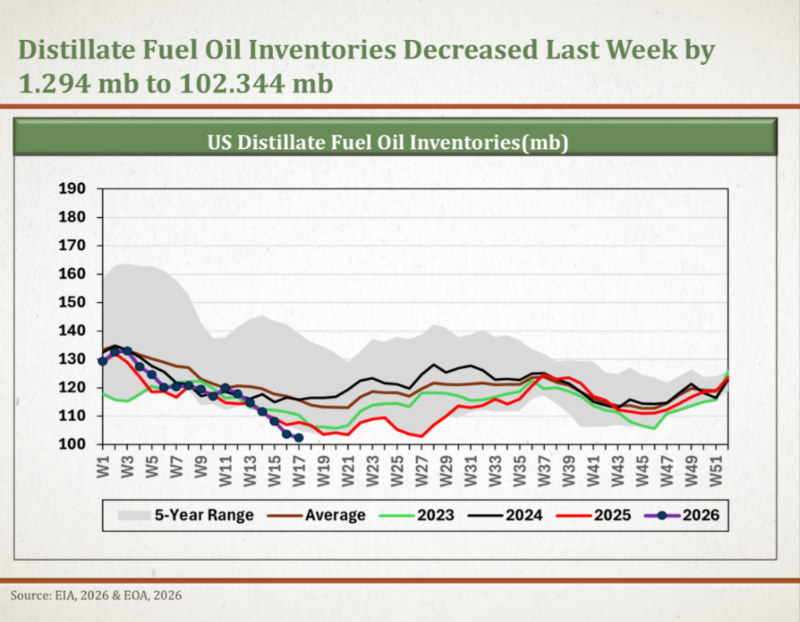
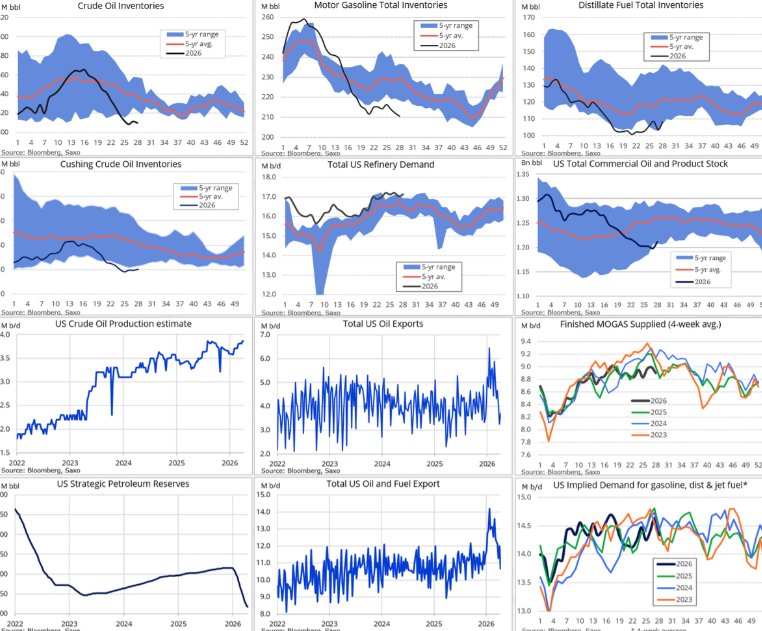
US distillate inventories underscore the tightness. As of the week ending August 14, 2026, total US distillate stocks stood at approximately 105.6 million barrels—the lowest level for this time of year since the mid-1990s in some assessments and roughly 12–13% below the five-year average. Stocks have been drawing amid strong export demand and solid domestic implied demand, leaving little buffer heading into the fall maintenance and winter heating season.
Impacts on Consumers
Higher diesel cracks translate directly into elevated pump and wholesale prices. US retail diesel has moved well above year-ago levels, raising costs for trucking, agriculture, rail, and shipping. These feed into broader inflation via higher freight rates for goods and food. In Europe and Asia, industrial users, trucking fleets, and (in colder regions) heating oil consumers face similar pressure. California drivers and airlines feel an amplified effect because of the state’s unique isolation and specifications.
Impacts on Investors
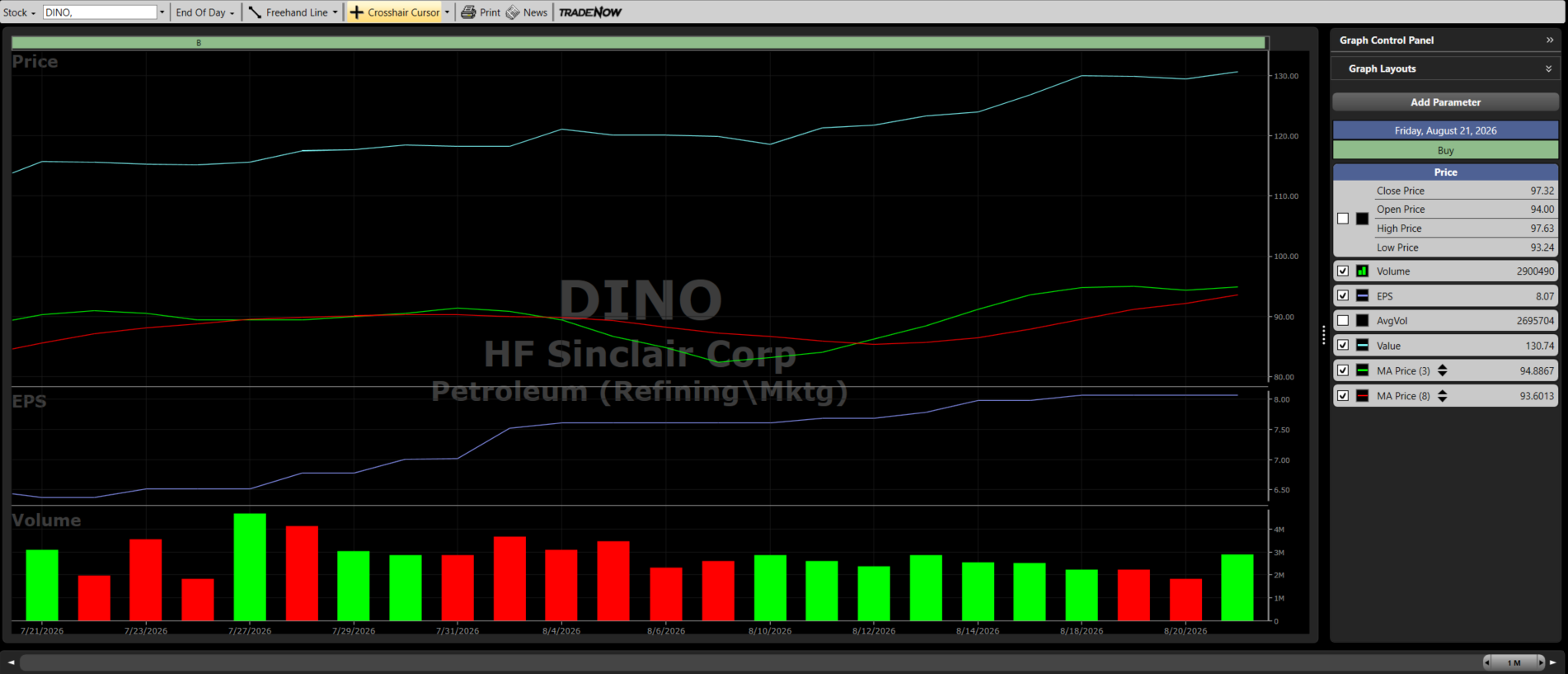
Refiners with complex, high-conversion capacity—especially those able to maximize diesel yields—are generating exceptional margins. This supports equity valuations and cash flows for integrated majors and independent refiners. Conversely, high fuel costs pressure transportation stocks, logistics firms, and consumer discretionary sectors sensitive to inflation. Energy traders and commodity funds focused on product cracks have found fertile ground, while the divergence between crude and product prices highlights refining bottlenecks over pure upstream supply.
Asia’s Critical Role Supplying California
California operates as a “fuel island.” With limited refining capacity relative to demand, no significant inbound product pipelines from the US Gulf Coast or Midwest, and strict CARB gasoline and diesel specifications, the state relies heavily on seaborne imports. Asia—particularly South Korea, India, Japan, and to a lesser extent China and other regional refiners—has historically been the dominant source of gasoline blendstocks, jet fuel, and diesel.
Recent California refinery closures have increased this dependence. Asia has supplied a substantial share (in some periods approaching or exceeding 20% of gasoline needs and significant jet volumes). Transit times of 25–45 days mean disruptions in Asian export availability (from feedstock shortages or export prioritization for domestic markets) hit California with a lag but then linger. In 2026, Asian jet and diesel loadings to the West Coast have at times fallen to multi-year or decade lows amid the broader squeeze, forcing California refiners to maximize jet and diesel yields at the expense of gasoline when cracks favor middle distillates.
This interdependence illustrates the global nature of the shortage: tightness in Asia quickly becomes tightness on the US West Coast.
Early Stages of a Global Fuel Shortage
Current conditions point to an early-stage structural shortfall in middle distillates. Inventories are low across key OECD regions, spare refining capacity is limited after years of underinvestment and closures, and geopolitical risks continue to constrain output and trade flows. Demand has remained resilient enough to prevent rapid rebalancing. Winter heating demand in the Northern Hemisphere will add further pressure if stocks do not rebuild.
There are essentially only two sustainable paths to lower prices:
- Increase refining capacity — New complex refining capacity takes years and significant capital to permit, build, and commission. Near-term relief is limited to higher utilization rates and yield optimization at existing plants.
- Demand destruction — Sustained high prices eventually force efficiency gains, modal shifts, reduced industrial activity, or substitution. This is already visible at the margin but is a blunt and economically costly mechanism.
In the interim, refiners will continue to respond to relative crack spreads by adjusting yields. When diesel cracks dramatically outpace gasoline or jet, units maximize middle distillates (through higher severity, hydrocracker optimization, and crude slate choices). If gasoline cracks recover relative to diesel, the pendulum can swing back. This product-by-product optimization is already occurring in California and other constrained markets.
The combination of elevated cracks in Asia, Europe, and the US, critically low US storage relative to the past five years, and California’s structural reliance on Asian barrels confirms that the global diesel market remains tight. Until either new capacity arrives or demand adjusts meaningfully, elevated product prices—and the economic consequences that follow—are likely to persist.
- MacroMicro crack spread data (US GC ULSD vs WTI, NWE gasoil vs Brent, Singapore gasoil vs Dubai): https://en.macromicro.me/collections/19/mm-oil-price/54240/ue-eu-asia-gasoline-gasoil-diesel-jet-fuel-crack-spreads
- EIA Weekly Petroleum Status Report / Distillate stocks: https://www.eia.gov/petroleum/supply/weekly/ and https://www.eia.gov/dnav/pet/pet_stoc_wstk_a_epd0_sae_mbbl_w.htm
- Reporting on record US diesel cracks and global supply losses (Bloomberg/TT News, AGBI, OilPrice.com): Various August 2026 articles detailing $100+/bbl peaks and 1.4 mb/d combined disruptions.
- California import reliance and Asia supply dynamics (IER, Bloomberg, S&P Global, Vortexa/Kpler references in trade press): Coverage of post-closure import growth and 2026 Hormuz-related export declines from Asia.
- Additional market commentary: Sparta Commodities, Argus Media, RBN Energy analyses on arbitrages and regional cracks.
Data as of reports through mid-to-late August 2026; markets remain highly dynamic.
The post Asia, Europe and US Diesel Crack Spreads Are On Fire – What does this mean for consumers and investors? appeared first on Energy News Beat.