
HF Sinclair Corporation (NYSE: DINO) just delivered its strongest quarterly results in years while simultaneously announcing it will retire the base oil refining assets at its Mississauga, Ontario facility—Canada’s largest (and essentially only significant) producer of Group II and Group III base oils. The decision comes amid a highly profitable lubricants segment, not losses. The company’s stated goal is a capital-light model with more consistent free cash flow. The pattern looks familiar: aggressive Net Zero-aligned policies in Canada raise the cost and risk of heavy industrial production, making ownership of refining assets less attractive relative to importing or producing elsewhere. The same dynamic has played out in California and other jurisdictions pursuing rapid decarbonization mandates.
Strong Profits, Especially in Lubricants
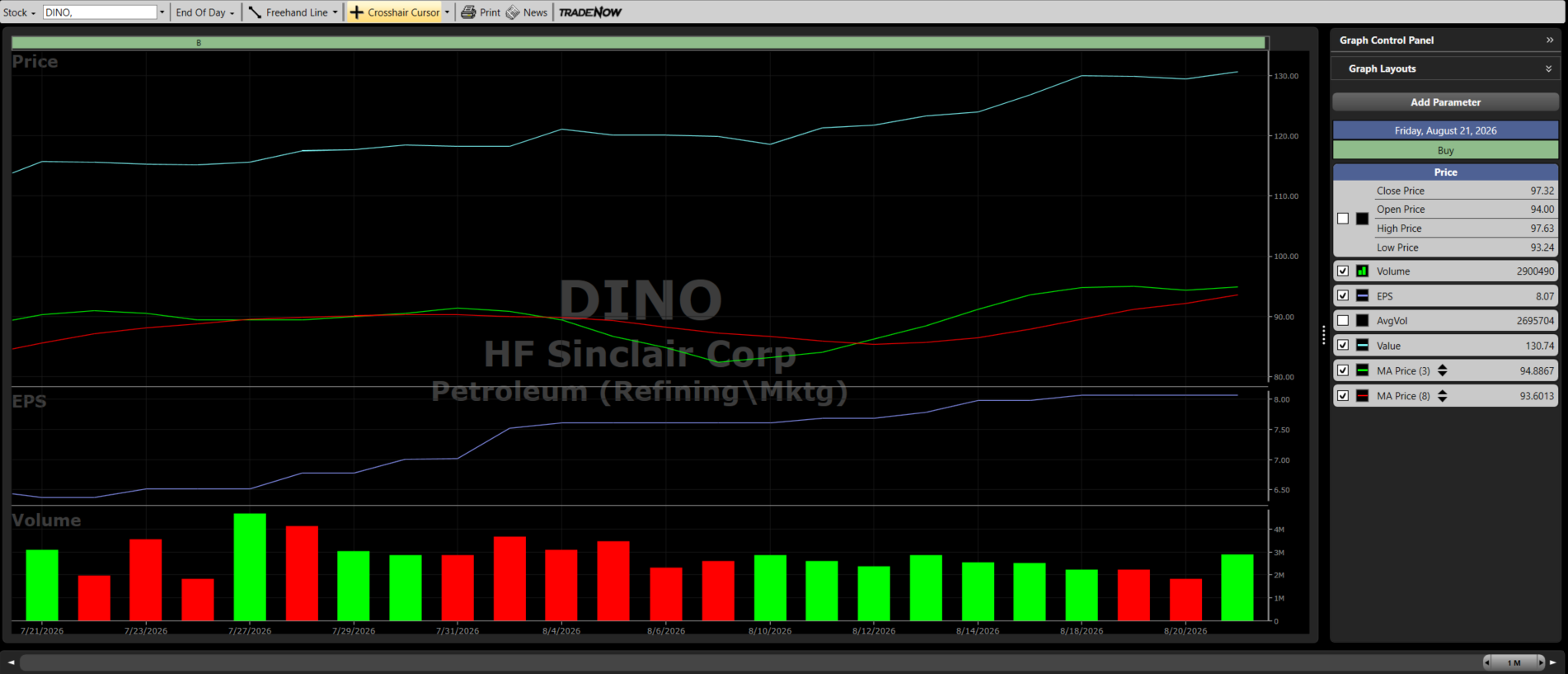
In its second-quarter 2026 results (ended June 30), HF Sinclair reported net income attributable to stockholders of $892 million, or $4.93 per diluted share. Adjusted net income was $960 million, or $5.31 per diluted share—the highest quarterly profit in four years and well above analyst estimates. Adjusted EBITDA reached approximately $1.482 billion. The company returned $265 million to shareholders via dividends and buybacks and raised its regular quarterly dividend 5% to $0.525 per share.
The Lubricants & Specialties segment performed strongly: adjusted EBITDA (or core profit) surged to $207 million from $55 million in the year-earlier quarter, driven by higher sales volumes and product prices. The segment includes Petro-Canada Lubricants (the Mississauga operation), Sinclair lubricants, Red Giant Oil, Sonneborn, and related specialty products. It generated roughly $2.3 billion in revenue in 2025.
Mississauga (historically the Clarkson Oil Refinery, acquired via the Petro-Canada Lubricants business) has a capacity of about 15,600 barrels per day of base oils. It has been a key North American source of high-quality Group II and Group III base oils used in engine oils, hydraulic fluids, and industrial lubricants. The site will continue blending, packaging, R&D, supply chain, logistics, and commercial operations under the Petro-Canada Lubricants brand. Base oil production itself ends, with supply shifting to long-term agreements with Chevron Products (Group II) and SK Enmove (Group III/YUBASE), plus continued access to Group I and specialty products from HF Sinclair’s Tulsa, Oklahoma refinery. Transition is expected to be substantially complete during 2027.
The Strategic Move: Spin-Off and Capital-Light Model
Alongside earnings, HF Sinclair announced plans to separate Lubricants & Specialties into an independent publicly traded company via the capital markets (tax-efficient, targeted over 12–18 months, subject to approvals). The remaining company focuses on refining, midstream, marketing, and renewables. Leadership described the separation as unlocking value through focused businesses with better strategic and capital flexibility. For the lubricants business specifically, exiting owned base oil refining at Mississauga is framed as a deliberate shift to a capital-light supply model: lower capital intensity and net working capital, reduced exposure to cyclical base oil cracks/volatility, competitive sourcing expected to improve margins, and stronger, more consistent free cash flow while retaining brands, technology, and distribution.
Company materials emphasize portfolio optimization rather than citing operating losses at Mississauga. Analysts noted surprise at shutting production capacity in a currently strong environment, interpreting it as a view that the strength may not persist or that the capital and risk profile of owning the Canadian refining assets no longer fits.
Unifor, representing roughly 250 unionized workers at the site, condemned the move. It called the decision reckless, warned of reduced Canadian energy/industrial security by shifting production offshore or to the U.S., and noted that every truck, train, mine, and factory runs on lubricants. The plant is described as Canada’s only significant domestic source of certain high-quality base oils.
Why Exit a Profitable Canadian Asset? Net Zero Policy Environment
HF Sinclair does not explicitly blame Canadian carbon pricing, Clean Fuel Regulations, or Net Zero targets. The economics of a capital-light model are clear on paper. Yet the timing and choice of asset—retiring domestic Canadian base oil refining while the overall lubricants business is highly profitable and global Group III markets have been tight—raise the question of relative attractiveness of investing and operating heavy refining assets under Canada’s policy regime versus alternatives.
Canada’s industrial carbon pricing (federal and provincial systems such as TIER), escalating carbon prices, and related clean-fuel rules add costs and compliance complexity to refining and oil-related production. Analyses have shown carbon pricing can erode cost competitiveness versus U.S. jurisdictions for oil sands and refining-related activities, with impacts growing as prices rise. Broader Net Zero pathways and emissions intensity requirements increase long-term capital and operational risk for traditional hydrocarbon processing. When a U.S.-based parent can source competitively from U.S. or international suppliers, retain blending and branding in Canada, and reduce capital tied up in Canadian refining assets, the calculation shifts. Production knowledge and capacity that leave are hard to replace.
This fits a wider pattern of Canadian industrial pressure. A recent example is the indefinite idling of the Howe Sound Pulp & Paper mill in Port Mellon, B.C. (opened 1909, last day planned for October 19, ~400 direct jobs plus broader local impact), part of a series of mill closures and thousands of forestry job losses in recent years. Critics point to policy environments that undervalue production and raise costs, leading to knowledge and capacity walking out the gate.
Parallel: California and Blue-State Overreach
The same dynamic is visible in California. Aggressive climate and air-quality rules, the Low Carbon Fuel Standard, Net Zero/carbon neutrality targets (including 2045 goals), high compliance costs, and signals of long-term demand destruction for conventional fuels have contributed to major refining capacity losses. Phillips 66’s Wilmington and Valero’s Benicia refineries are among recent closures or announced closures that removed a large share (estimates around 18–30% in recent years depending on the baseline) of in-state capacity. Industry voices have described the regulatory environment as making the state effectively “un-investable” for conventional refining; remaining capacity faces high costs, and the state has shifted toward greater import reliance amid price volatility and supply concerns. California’s policies pursue rapid emissions cuts and vehicle electrification while transportation fuel demand persists for years, producing higher prices and reduced domestic resilience—exactly the energy-security risk Unifor flagged for Canada’s base oil supply.
Other jurisdictions with strong Net Zero mandates have seen similar capital and capacity flight from heavy industry. The common thread is not that every facility is unprofitable in isolation, but that the cumulative regulatory, carbon-pricing, permitting, and long-term policy risk makes continued ownership of capital-intensive production assets less attractive than alternatives.
Bottom Line
HF Sinclair is profitable, and its lubricants business is performing well. It is still choosing to stop refining base oils in Canada, spin the segment into a capital-light independent company, and source from elsewhere while keeping lighter-touch operations in Ontario. Official language centers on optimization, flexibility, and cash flow. The practical outcome is reduced Canadian domestic production capacity for a critical industrial input, greater reliance on imports or U.S. supply, and another data point in the pattern of heavy industry exiting or shrinking under Net Zero-aligned leadership in Canada and places like California.
When profitable operations decide it is no longer worth the capital and risk of producing in a high-policy-cost jurisdiction, the issue is not a sudden absence of profits. It is whether the policy environment still treats reliable, competitive production as something worth keeping.
The real loser is the Canadian Consumer, as they will be subject to import fees from Mark Carney’s poor negotiation skills. He flat-out misrepresented the deal and what happened in the trade discussions with President Trump. And the leaders in the Tulsa office for HF Sinclair could recognize that having a quarter of huge profits would not always be available under the overreach of the Canadian Net Zero leadership. So Canada will have to import 100% of their oil for their cars, hydraulic fluids, and business lubricants. Not good for energy security when you cannot keep your machines running. Look at Germany; that is one of the reasons they lost WWII
Appendix: Sources and Links
- HF Sinclair Q2 2026 results and strategic transformation announcements (company materials, SEC-related, investor updates): https://investor.hfsinclair.com/ and related press releases/earnings (July 28, 2026); example summary PDF/exhibit references and Reuters coverage.
- Reuters: “HF Sinclair posts highest profit since 2022, plans lubricants unit spin-off” (July 28, 2026): https://www.reuters.com/business/energy/hf-sinclair-beats-quarterly-profit-estimates-2026-07-28/
- Oil & Gas Journal and related industry coverage of supply deals and closure: https://www.ogj.com/refining-processing/news/55395454/hf-sinclair-inks-supply-deals-amid-pending-segment-spinoff-refinery-closure
- Unifor statement: https://www.newswire.ca/news-releases/unifor-condemns-hf-sinclair-decision-to-shut-canada-s-largest-base-oil-refinery-813677334.html (and Unifor site)
- INsauga and local coverage of Mississauga facility: https://www.insauga.com/canadas-largest-base-oil-producer-to-end-refining-after-80-years-in-mississauga/ and https://www.insauga.com/imported-oil-will-replace-mississauga-refinery-product-that-supplies-canada/
- Base oil market impact: https://www.baseoilnews.com/company-news/hf-sinclair-plant-closure-raises-pressure-for-group-iii-capacity
- Truck News / other trade: https://www.trucknews.com/infrastructure/hf-sinclair-to-spin-off-lubricants-business-retire-former-petro-canada-refinery/1003219177/
- California refining capacity losses and policy context (S&P Global, Breakthrough Institute, industry/state analyses, Energy News Beat prior coverage): examples include S&P Global interactive on closures and price impacts; Breakthrough Institute on regulatory drivers; California Energy Commission-related discussions of supply gaps.
- Canadian carbon pricing/competitiveness analyses (examples): Baker & O’Brien on carbon price impacts; Fraser Institute/related studies on oilsands/refining cost impacts; federal Clean Fuel Regulations materials.
- X post on Howe Sound Pulp & Paper / broader Canadian mill losses (example of industrial pressure): https://x.com/JayGenXer/status/2091528461739348403
- Additional SEC/earnings details and investor presentation references available via HF Sinclair IR and EDGAR filings for the July 28, 2026 announcements.
All figures and quotes drawn from the cited public company releases, regulatory filings, union statements, and contemporaneous reporting as of the announcement period (late July–early August 2026). Policy impact interpretations reflect the observable pattern of capacity decisions under high-regulatory-cost Net Zero frameworks.
The post HF Sinclair posts a profit and closes its only Canadian lubricant (base oil) refinery. Not because of no profits, but it is not worth doing business with Net Zero Leadership. appeared first on Energy News Beat.